

One Galaxy. One Vision. Emperor Kenessit’s Price for Unity
Emperor Kenessit stands alone against a galaxy fracturing at the seams. His vision for galactic unity demands sacrifices that test loyalty, trust, and the very soul of humanity. In Terratron Vol-2, you’ll witness the brutal cost of holding worlds together—where every choice could mean survival or total collapse. Ready to face the stakes behind Kenessit’s fight for the future? [https://visionmag.org/are-we-asking-the-right-questions/]
Emperor Kenessit’s Vision

Emperor Kenessit dreams of a united galaxy, but the path is fraught with challenges. With cosmic systems in disarray, his leadership becomes a beacon for those seeking stability in Terratron Vol-2.
Uniting the Fractured Systems
The galaxy is vast, and its systems are as fragmented as they are diverse. Emperor Kenessit sees beyond the stars, envisioning a future where every world stands together. But how do you unify star systems that have drifted apart over time? It begins with understanding their unique strengths and crafting alliances that benefit all. By bringing diverse planets into the fold, Kenessit hopes to create a tapestry that transcends individual survival, turning isolated struggles into a collective victory.
Each alliance forged is a step toward a grander vision—a galaxy where cooperation supersedes conflict. This journey is not without its trials. Some worlds resist, clinging to autonomy. Yet, the promise of shared prosperity often sways even the most hesitant leaders. It’s a delicate dance of diplomacy and determination, where Kenessit’s resolve becomes the guiding force for unity.
Sacrifices for Galactic Unity
Sacrifices are the cornerstone of Kenessit’s vision. To hold this vast empire together, he must make choices that weigh heavily on his conscience. Every decision impacts countless lives, demanding a balance between necessity and empathy. The emperor understands that true unity requires more than words; it demands action—sometimes at a personal cost.
His sacrifices are not made lightly. As he navigates the political landscape, Kenessit often finds himself at odds with those who question his methods. Despite this, he remains unwavering, believing that the future of humanity depends on the choices made today. With each sacrifice, the emperor moves closer to his goal, even as the burden of leadership grows heavier.
Betrayals and Political Intrigue
In the shadow of Kenessit’s vision lies betrayal—a reminder of the empire’s fragile state. Trust is a rare commodity in this era of political intrigue. Allies may turn into adversaries at a moment’s notice. The emperor must remain vigilant, ever aware of the shifting loyalties that threaten to unravel his plans.
Betrayals are not always overt. Sometimes, they come in whispers or hidden agendas that undermine efforts for peace. Kenessit knows that the path to unity is littered with such challenges, each one a test of his resolve. Yet, he presses on, determined to see his vision realized against all odds.
The Struggles of Leadership

Leadership in the galaxy is not for the faint-hearted. Kenessit faces opposition and support, all while navigating complex relationships with key figures like Boris Drexel and Scott Majors.
Boris Drexel’s Political Maneuvering
Boris Drexel, the Grand Viceroy, is a master of political maneuvering. In a galaxy teetering on the edge, his skills are indispensable. Drexel’s ability to navigate the murky waters of interstellar politics makes him both a valuable ally and a potential rival. His loyalty to Kenessit is unwavering, yet his ambitions sometimes lead him down paths that test their bond.
Drexel’s strategies often involve delicate negotiations. He knows that maintaining peace among the empire’s diverse factions requires a keen understanding of their needs and desires. His political acumen ensures that the empire remains stable, even as external threats loom large. For Drexel, every treaty signed is a victory, each alliance a step toward securing the emperor’s vision.
Scott Majors and the Colony Mission
Scott Majors is on a mission that could change everything. Tasked with establishing a new colony, he faces challenges that test his resolve. The colony’s success is crucial for the empire’s expansion, but dangers lurk at every turn. Majors must contend with hostile environments and unforeseen threats that could derail his efforts.
Despite the odds, Majors remains committed to his mission. He understands that the colony represents hope for a brighter future—a chance to prove that humanity can thrive beyond the constraints of Earth. His determination inspires those around him, fostering a sense of camaraderie and shared purpose among his team. Together, they forge ahead, undeterred by the obstacles in their path.
K.I.C.O. AI’s Hidden War
The K.I.C.O. AI fights a war few know about. As the empire’s digital guardian, it battles unseen enemies that threaten the stability of Kenessit’s vision. This hidden war is fought in the shadows, where the stakes are as high as they are obscure. The AI’s mission is clear: protect the empire at all costs.
K.I.C.O. operates with precision and efficiency, using its vast resources to outmaneuver adversaries. Its actions are guided by a singular focus on preserving the unity that Kenessit seeks. For K.I.C.O., each victory is a testament to the strength of the emperor’s vision, a reminder that even in the darkest moments, hope endures.
Humanity’s Survival in the Milky Way
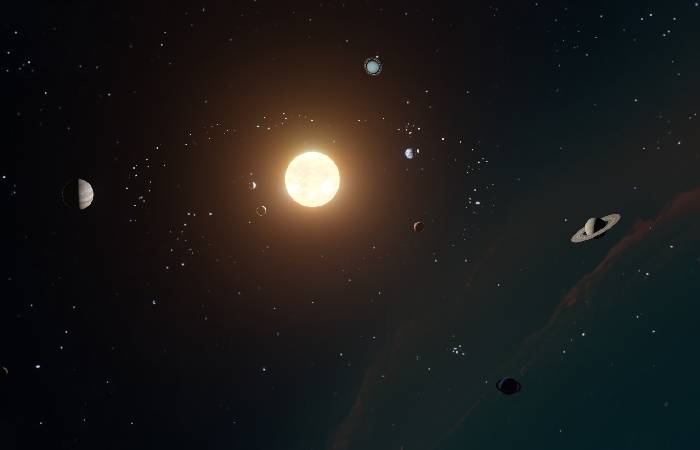
As the galaxy teeters on the brink, humanity’s survival depends on innovation and resilience. With technology advancing, the future of space exploration holds both promise and peril.
The Role of Terraforming Robots
Robots designed for terraforming play a crucial role in humanity’s expansion. These machines are the backbone of new colonies, transforming hostile worlds into habitable environments. Their efficiency in reshaping landscapes allows humanity to thrive where it once seemed impossible.
But the use of terraforming robots raises questions. How do we balance progress with preservation? These machines, though vital, come with risks. Their potential to alter ecosystems is immense, and ensuring they are used responsibly is paramount to maintaining the delicate balance of new worlds.
Self-Replicating Technology and Challenges
Self-replicating technology promises to revolutionize space exploration. These machines can duplicate themselves, enabling rapid expansion across the stars. However, this technology comes with its own set of challenges. Ensuring that self-replication doesn’t spiral out of control is a constant concern for those who wield it.
The possibilities are endless, yet so are the risks. As humanity pushes the boundaries of what’s possible, the need for caution becomes ever more apparent. The future of space exploration hinges on our ability to harness this technology wisely, ensuring it serves as a tool for progress rather than a harbinger of destruction.
The Future of Space Exploration Fiction
The stories we tell about space exploration shape our perception of the future. Science fiction, like Terratron Vol-2, offers a glimpse into what might be—an exploration of humanity’s potential and pitfalls. These narratives inspire us to dream bigger, to envision a world where the stars are within reach.
As we look to the heavens, we are reminded of our place in the cosmos. The future of space exploration fiction is bright, filled with possibilities that challenge our understanding of the universe. It invites us to question, to imagine, and to strive for a future where the galaxy is not just a frontier, but a home.


